Product tour
Everything inside CoWork OS
The workspace, agents, bots, memory, model routes and integrations behind the free, open-source AI app for real work.
Product preview
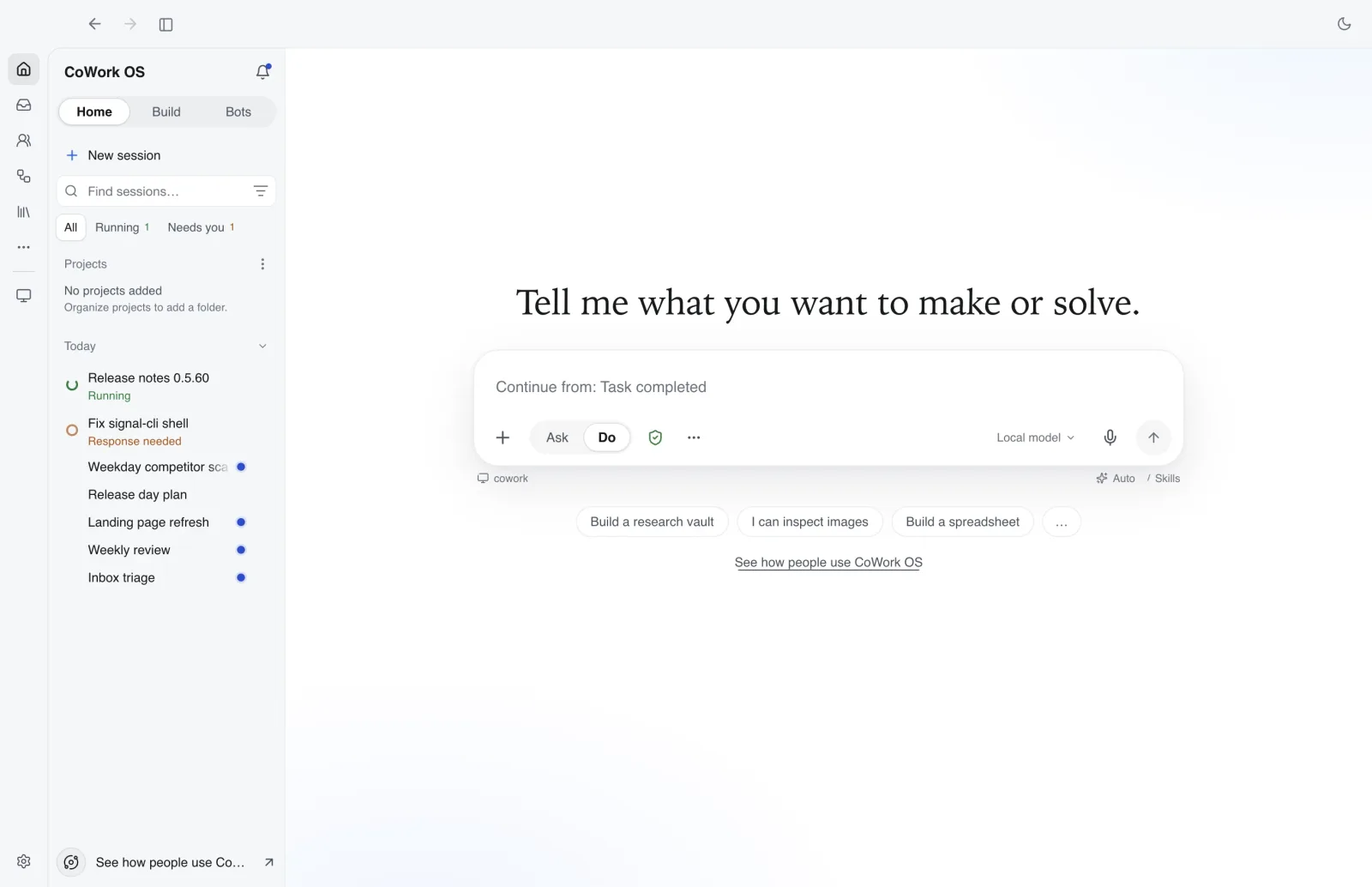
Start from the app, then move into real work
The main workspace keeps suggested workflows, active context, recent runs, and the task composer in view.
How it works
From request to controlled execution
A clear, approval-gated execution loop from request to output.
- 1
Step 1
Describe the outcome
Tell CoWork OS what you want. It creates an execution plan automatically.
Learn more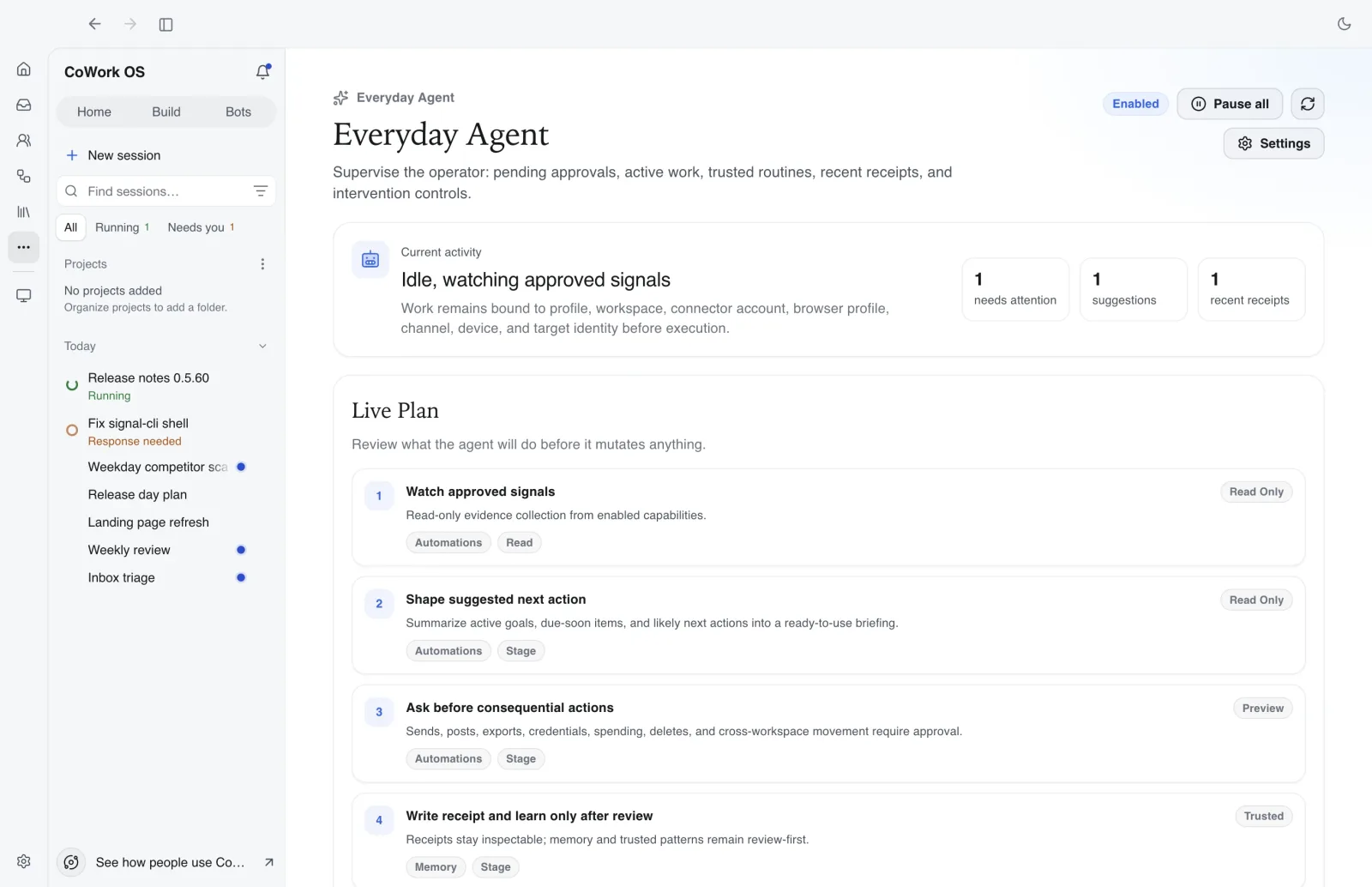
- 2
Step 2
Let it plan and execute
Choose a mode — Autonomous, Collaborative, Multi-LLM, or Think With Me — and let the agent run.
Learn more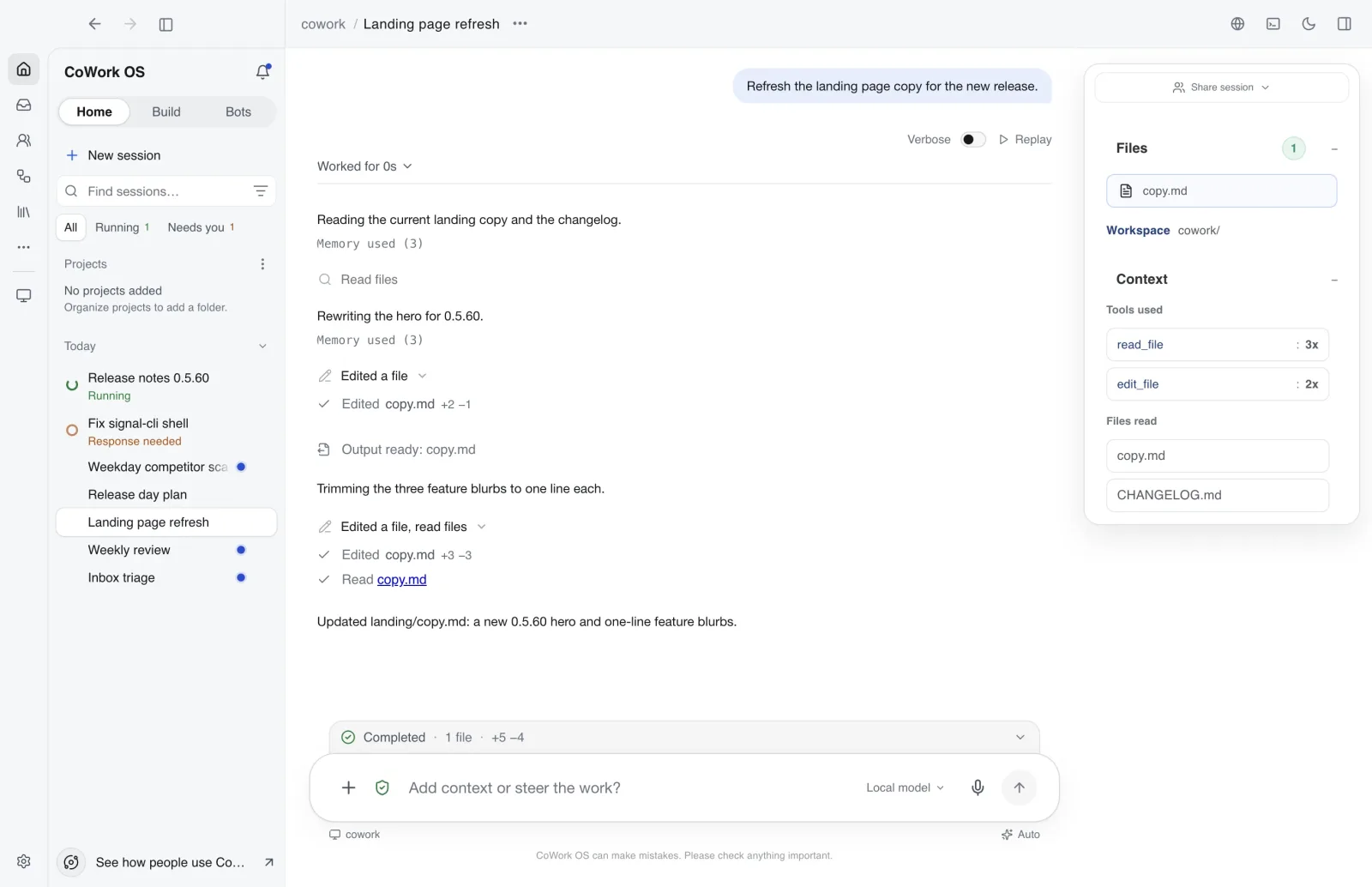
- 3
Step 3
Watch the timeline and outputs
Track timeline events, shell output, generated files, and agent decisions in real time.
Learn more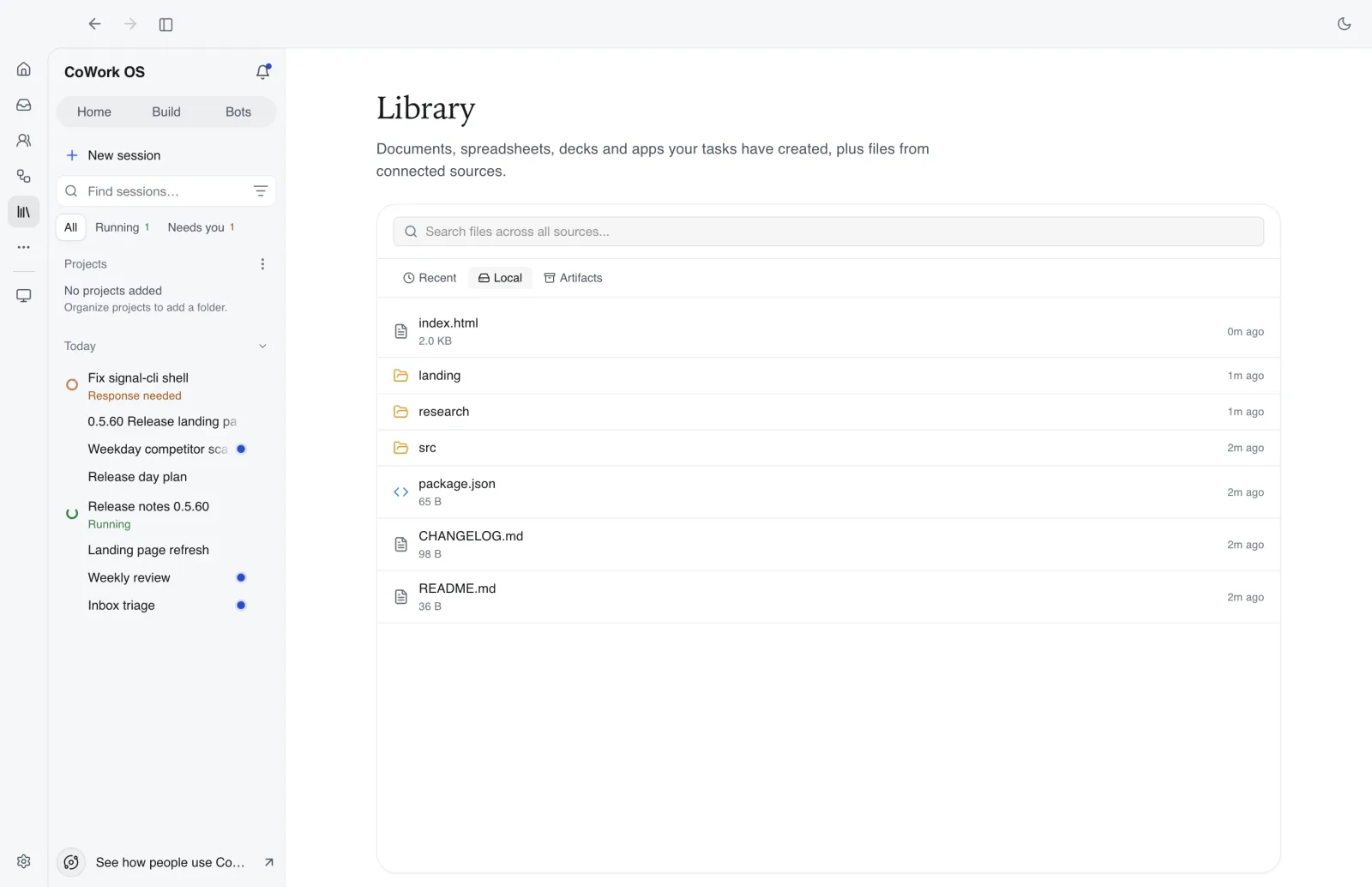
- 4
Step 4
Approve risky actions only
Destructive actions and spending remain explicitly approval-gated by design.
Learn more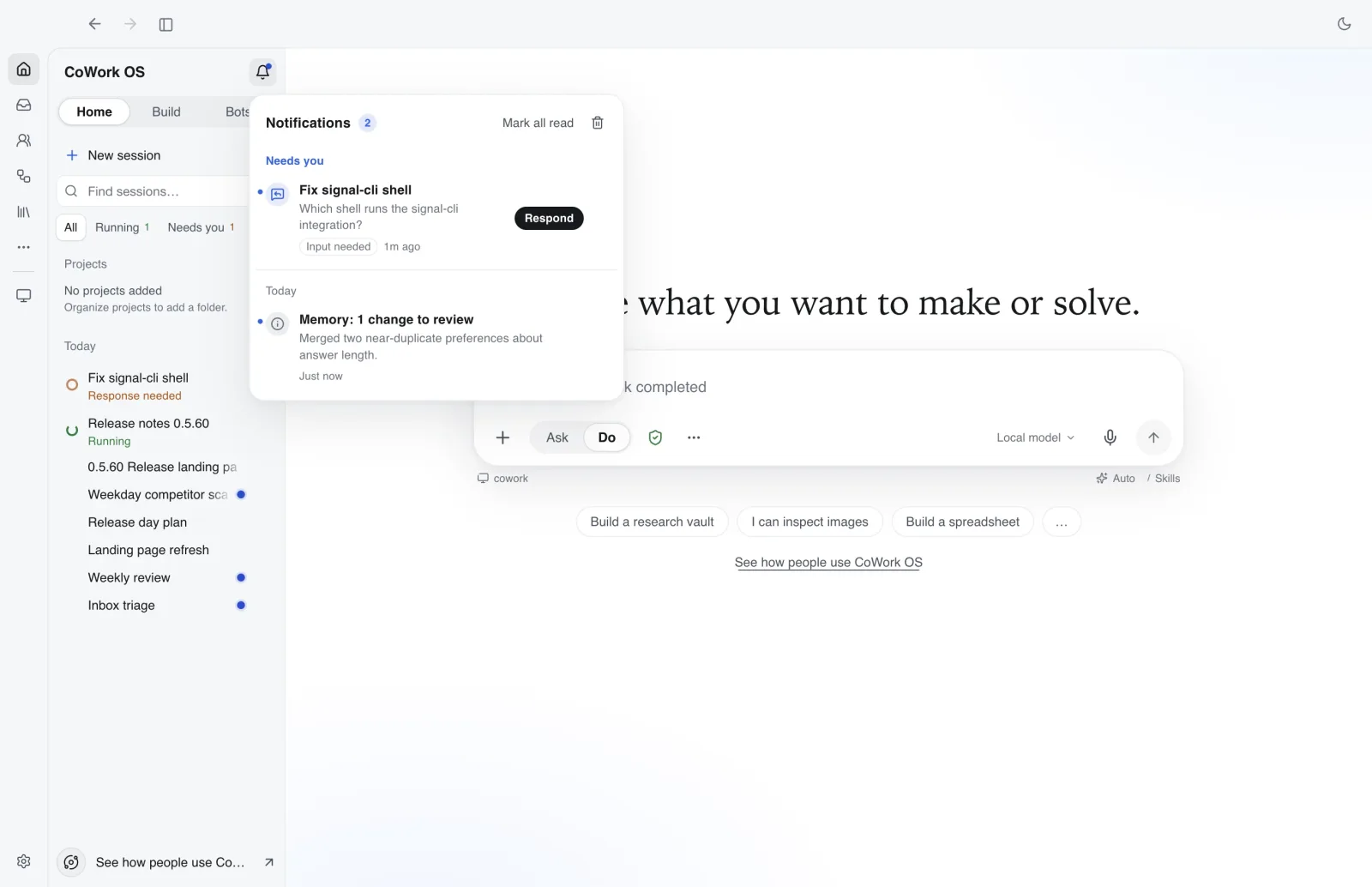
Everyday Agent keeps active goals, plans, and priority queues visible.
Inside the app
Five places where the work happens
01 · Agents
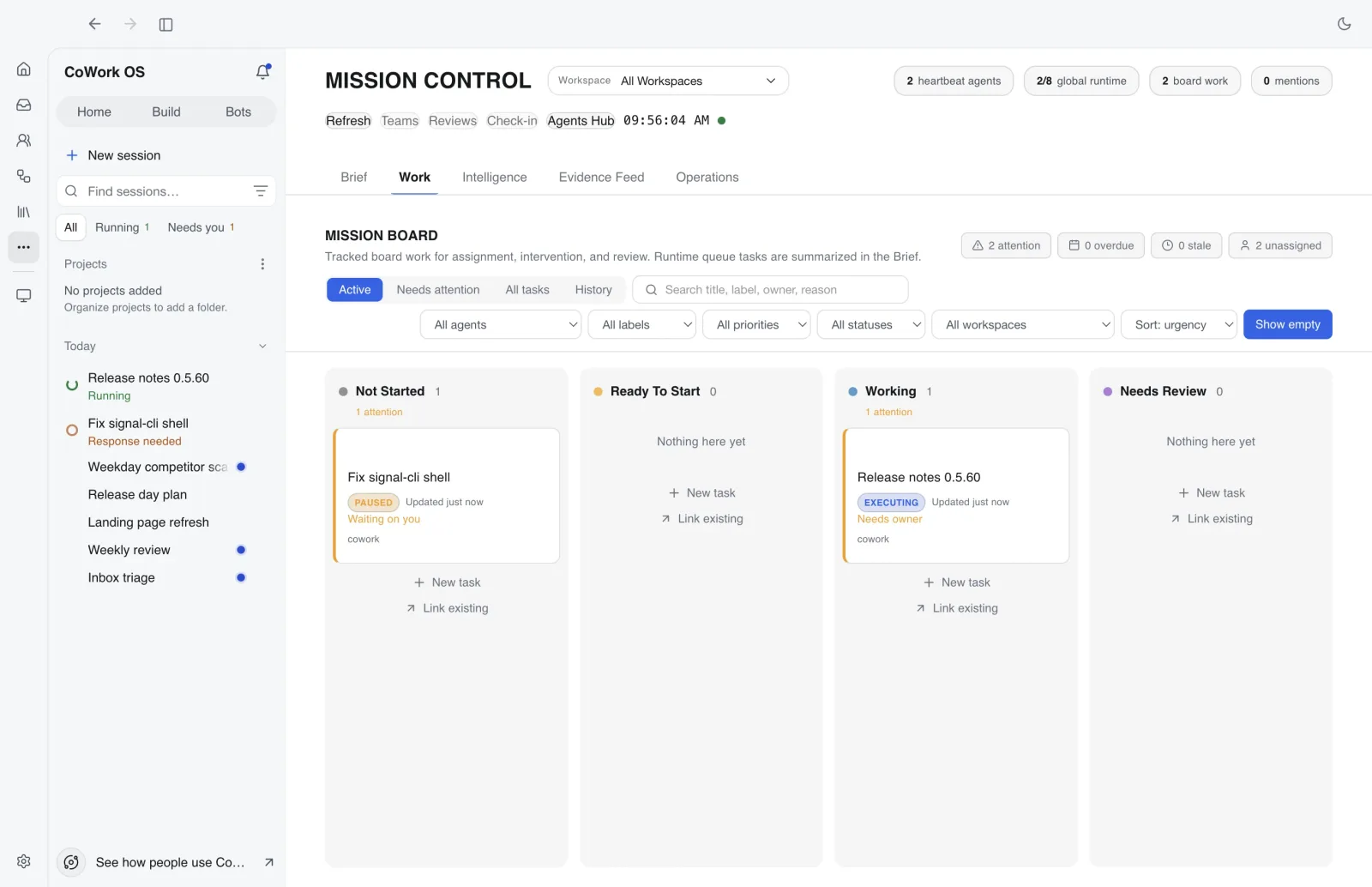
Agent Runtime & Teams
Task-based execution with dynamic re-planning, multi-agent collaboration, and persistent teams. Watch the real-time timeline as the agent plans, executes, and produces artifacts.
- Four per-task modes: Autonomous, Collaborative, Multi-LLM, Think With Me
- Agent teams with shared checklists and multi-LLM synthesis
- High-signal completion UX with explicit output visibility
02 · Build
CoWork Build
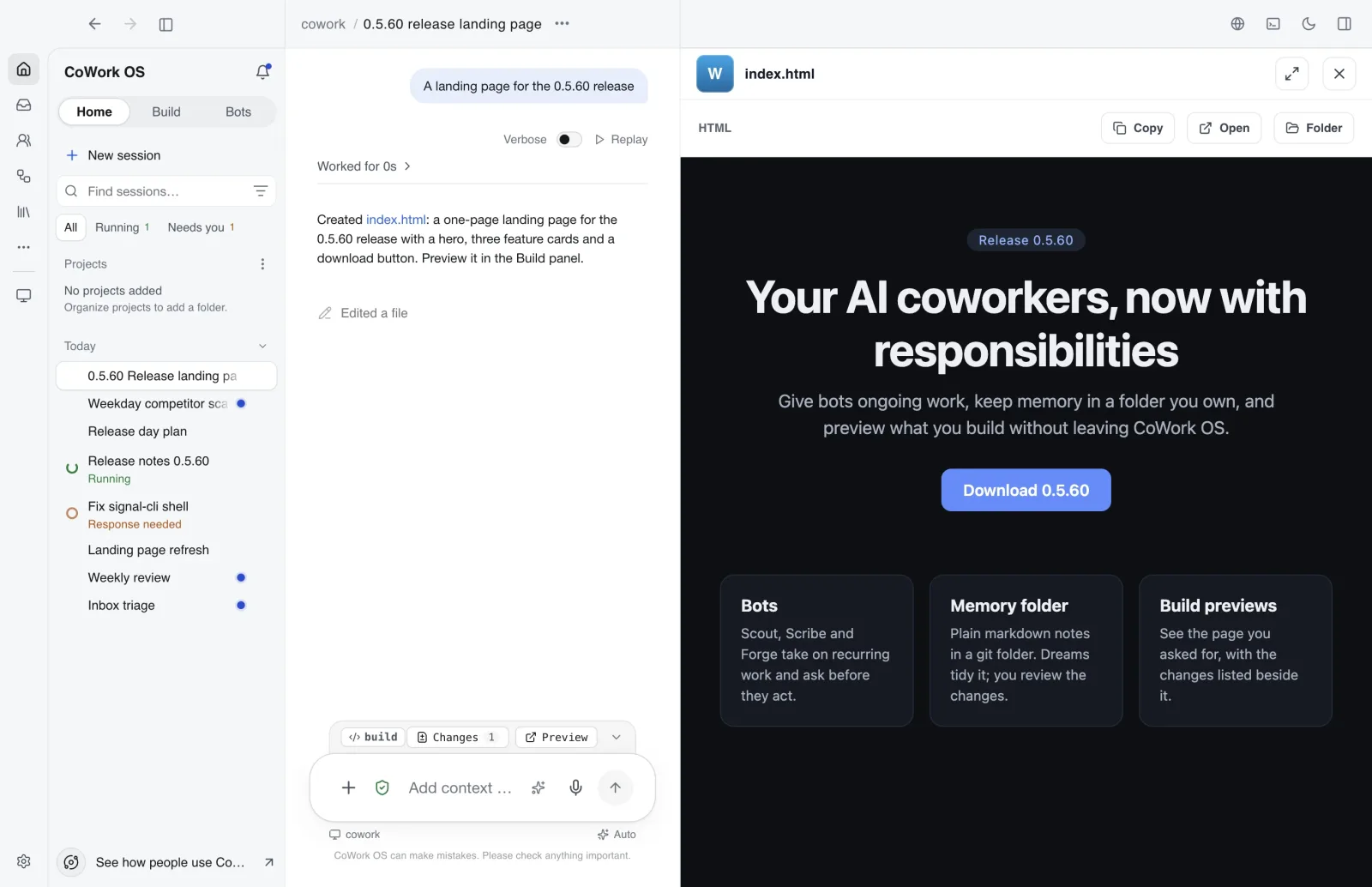
Build sessions turn an idea into a working page or prototype. Preview it next to the session, and see every changed file one click away.
- Build view with attachments, drafts and recent builds
- Sandboxed live preview with a per-file changes panel
- Phased idea-to-prototype workflow with named checkpoints and revert support
03 · Bots
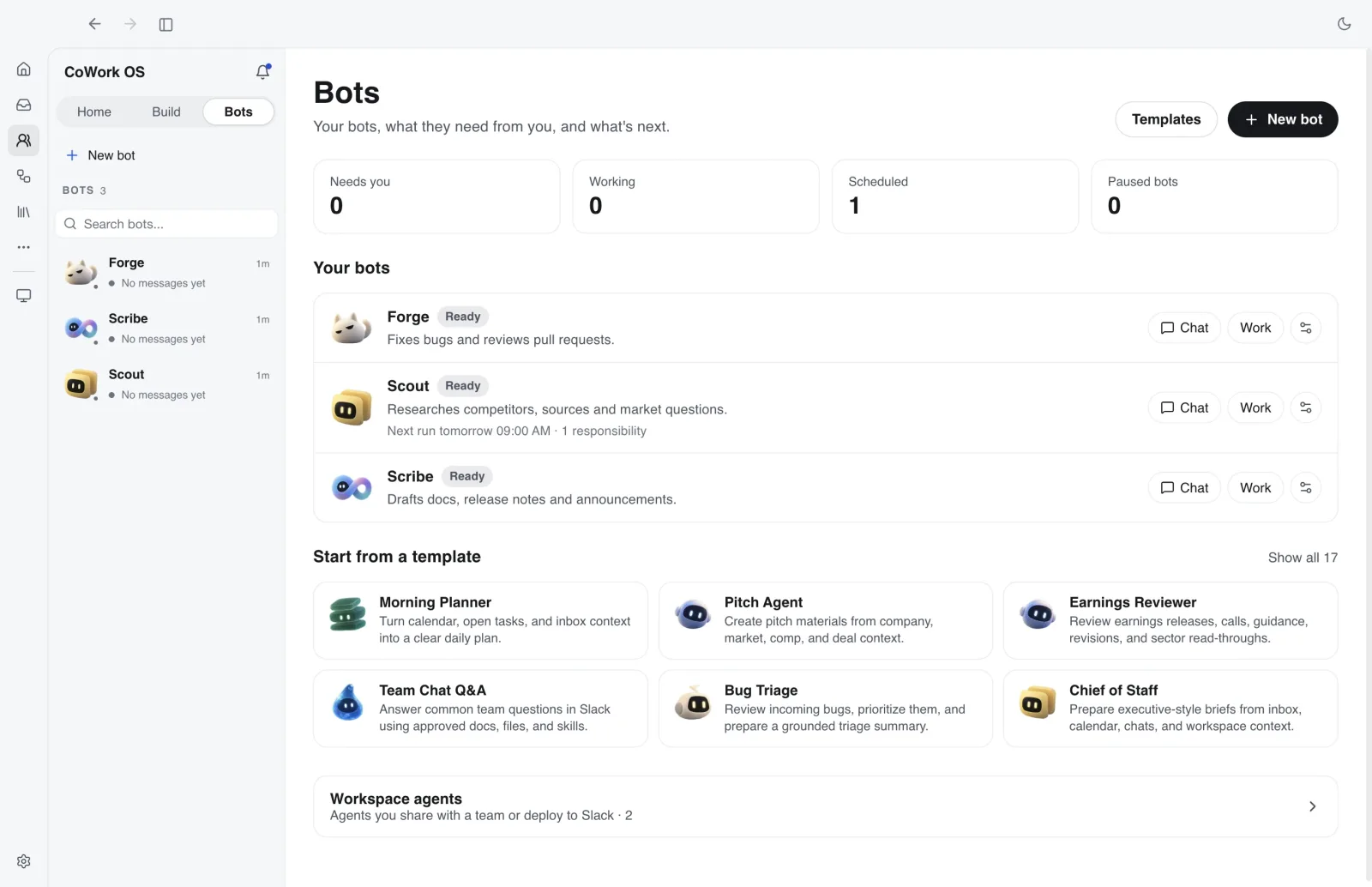
CoWork Bots
The Bots page shows your bots, what they need from you, and what is scheduled. Give a bot a responsibility, and it runs only after you turn it on.
- Modes: Observe, Propose, or Act within granted scope
- Each responsibility has a trigger, sources, a review boundary and a budget
- Responsibilities are saved paused until you turn them on
04 · Memory
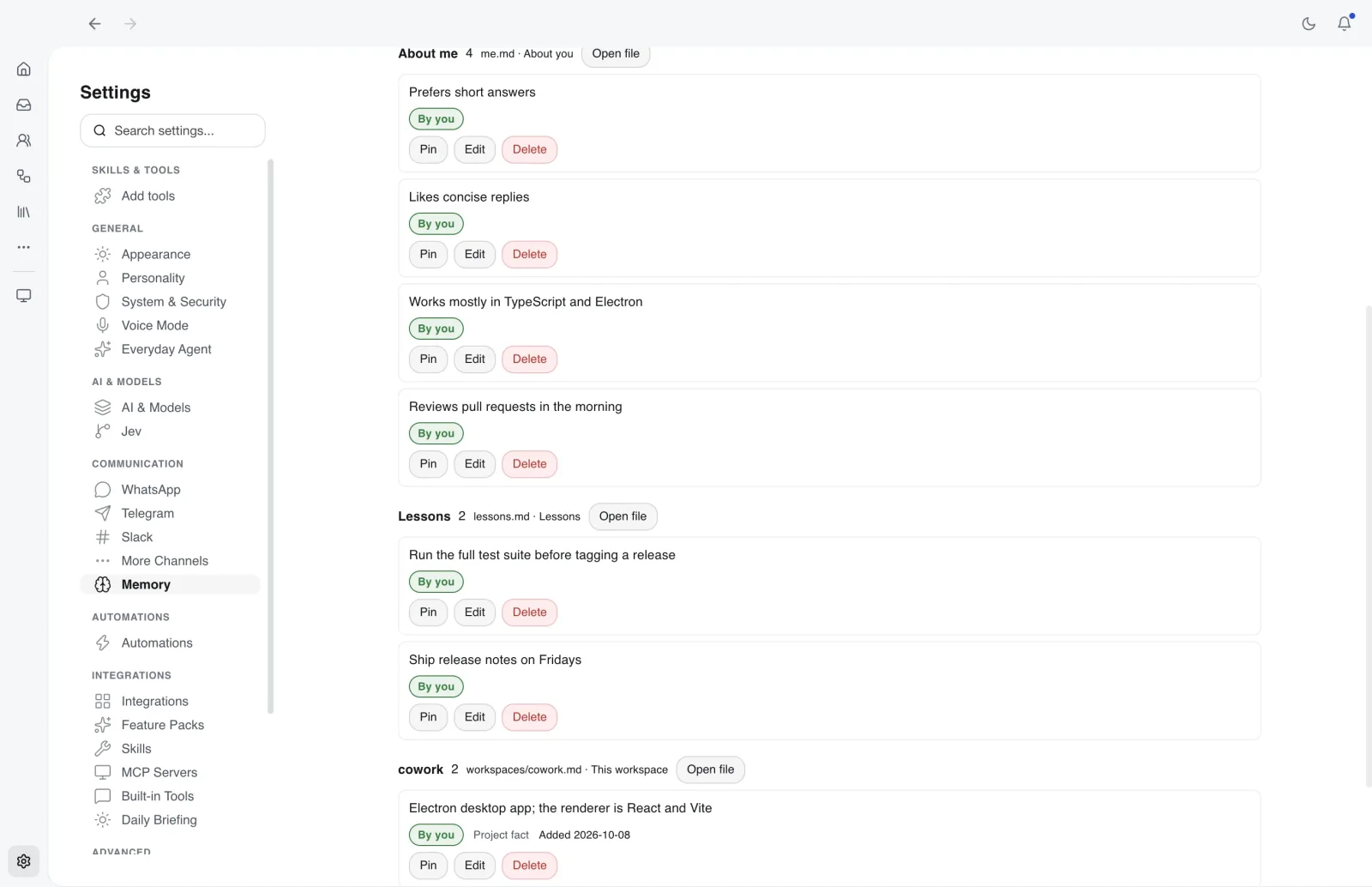
Memory you can read and edit
CoWork keeps what it learns in a memory folder of plain markdown notes in a local git repo. Every change is a commit you can inspect.
- Notes such as MEMORY.md, me.md and lessons.md, plus one file per workspace
- Edit, pin or delete notes in Settings, or edit them in any editor
- Dreaming tidies duplicates and stale notes, and changes to your notes wait for review
05 · Interface
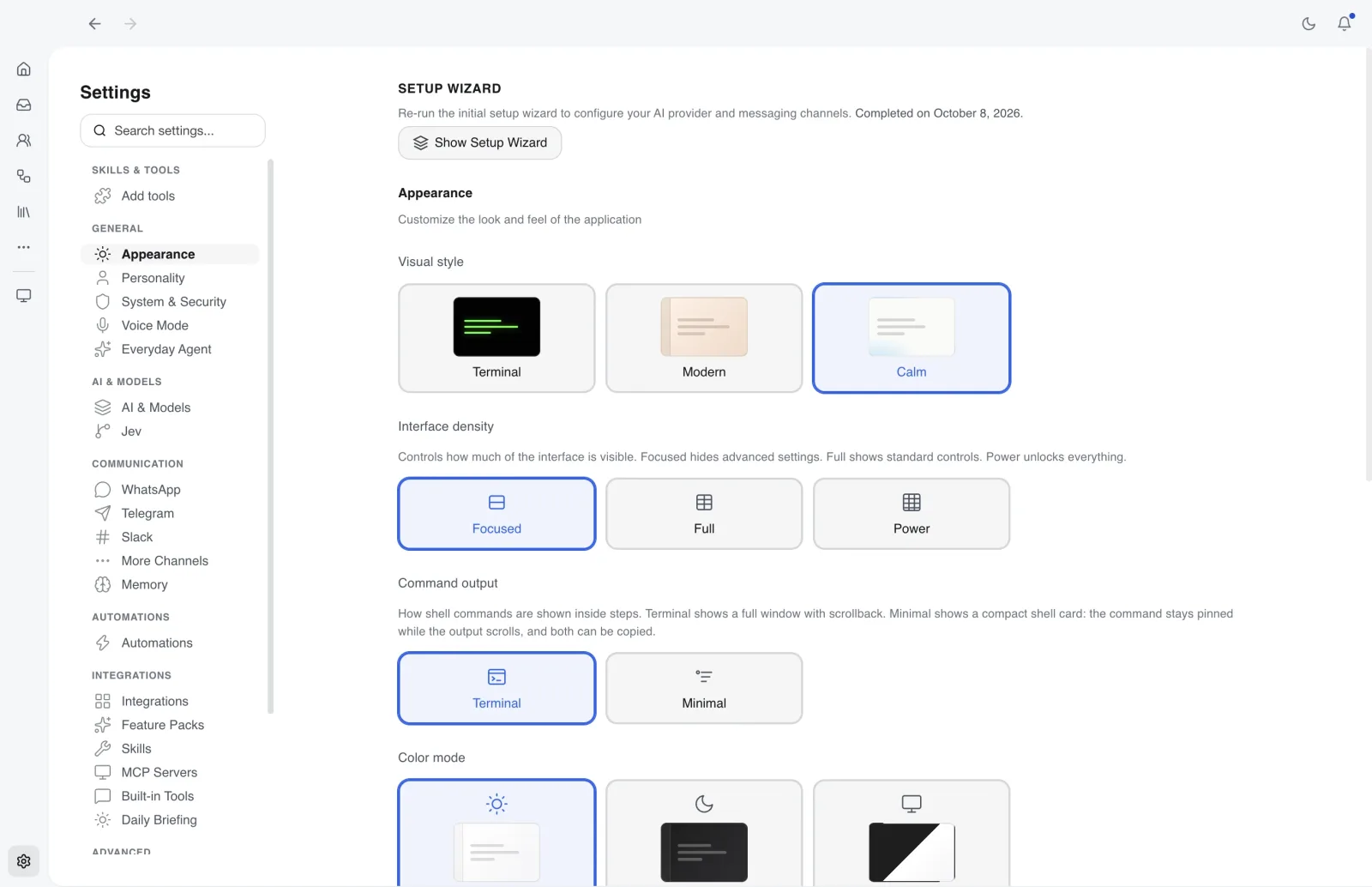
Calm interface
An optional Calm visual style, in light or dark, with an icon-rail sidebar and a session panel. Notifications show what needs you first.
- Icon rail for Home, Inbox, Bots and Automations, with Library in Calm
- Search sessions with Cmd/Ctrl+K and filter to Running or Needs you
- Mission Control, Devices, Everyday, Build and Add tools under More, pinnable to the rail
Features
What makes CoWork OS different
Production differentiators from the README and docs, focused on reliability and operator visibility.
Mission Control
Kanban board, heartbeat monitoring, standup reports, and centralized orchestration.
Read docsOutput Completion UX
High-signal completion toasts, file visibility cues, and artifact parity.
Read docsActive Context Sidebar
Live connectors and enabled skills are always visible with auto-refresh.
Read docsUsage Insights
Cost/token tracking, heatmaps, top skills, and pack-level analytics.
Read docsAI Playbook
Learns what worked from successful runs and feeds patterns into future tasks.
Read docsChatGPT History Import
Import prior conversation history to avoid cold-start context loss.
Read docsSkills, connectors, channels, profiles, and more in the docs.
Explore every featureOpen harness underneath
Keep the workspace. Change the model route.
CoWork OS keeps tools, skills, memory, approvals, agents, artifacts, automations, and task history in one harness. Choose among supported model sources without rebuilding the rest of your workflow.
CoWork OS is free and open source. Providers, gateways, connected services, and account plans may charge separately and apply their own eligibility and usage rules.
Provider APIs
Bring keys for direct model access and provider-controlled billing.
Stays the same on every route
- Tools
- Skills
- Memory
- Approvals
- Agents
- Artifacts
- Automations
- Task history
Integrations
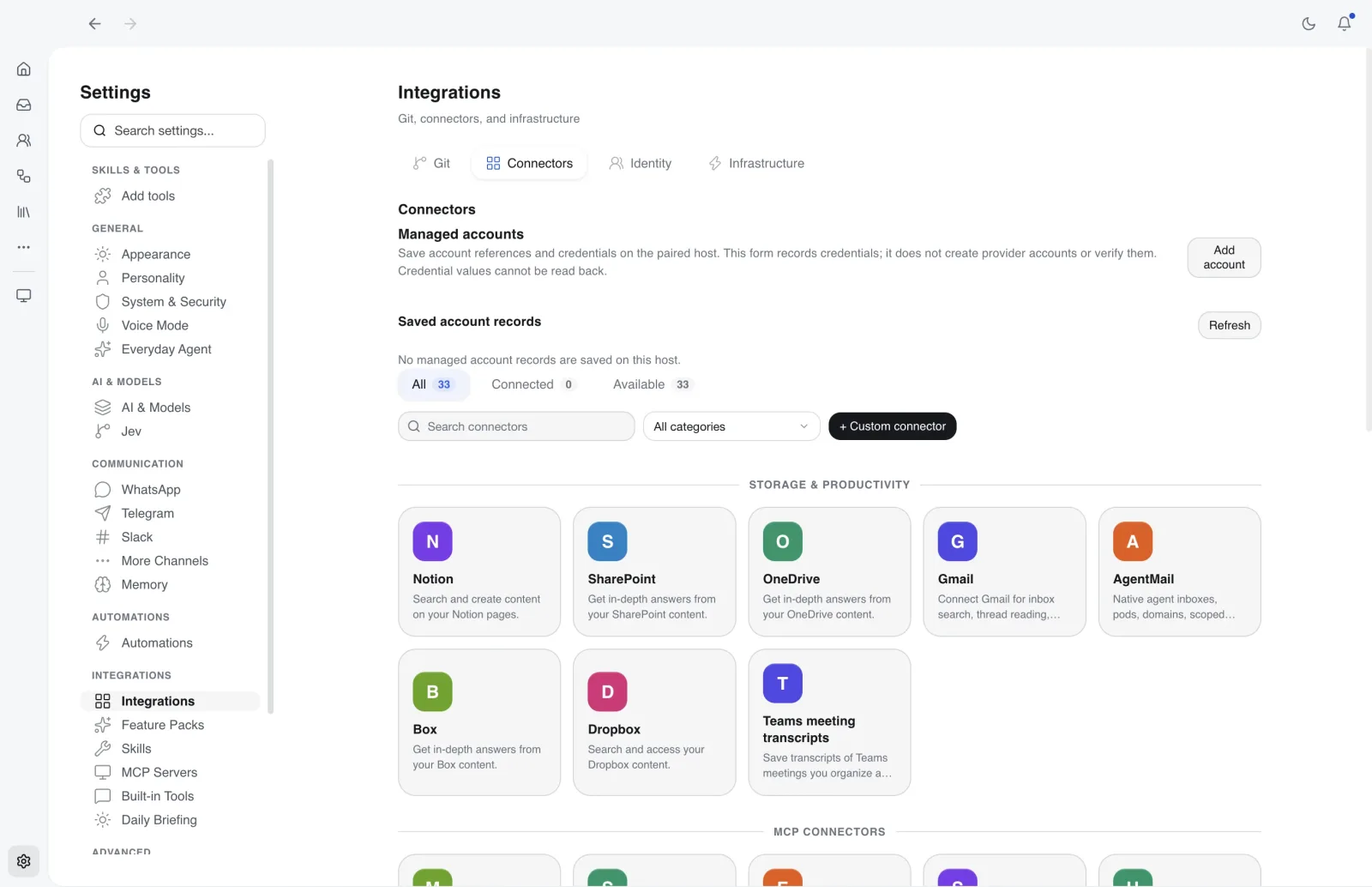
Works with your existing stack
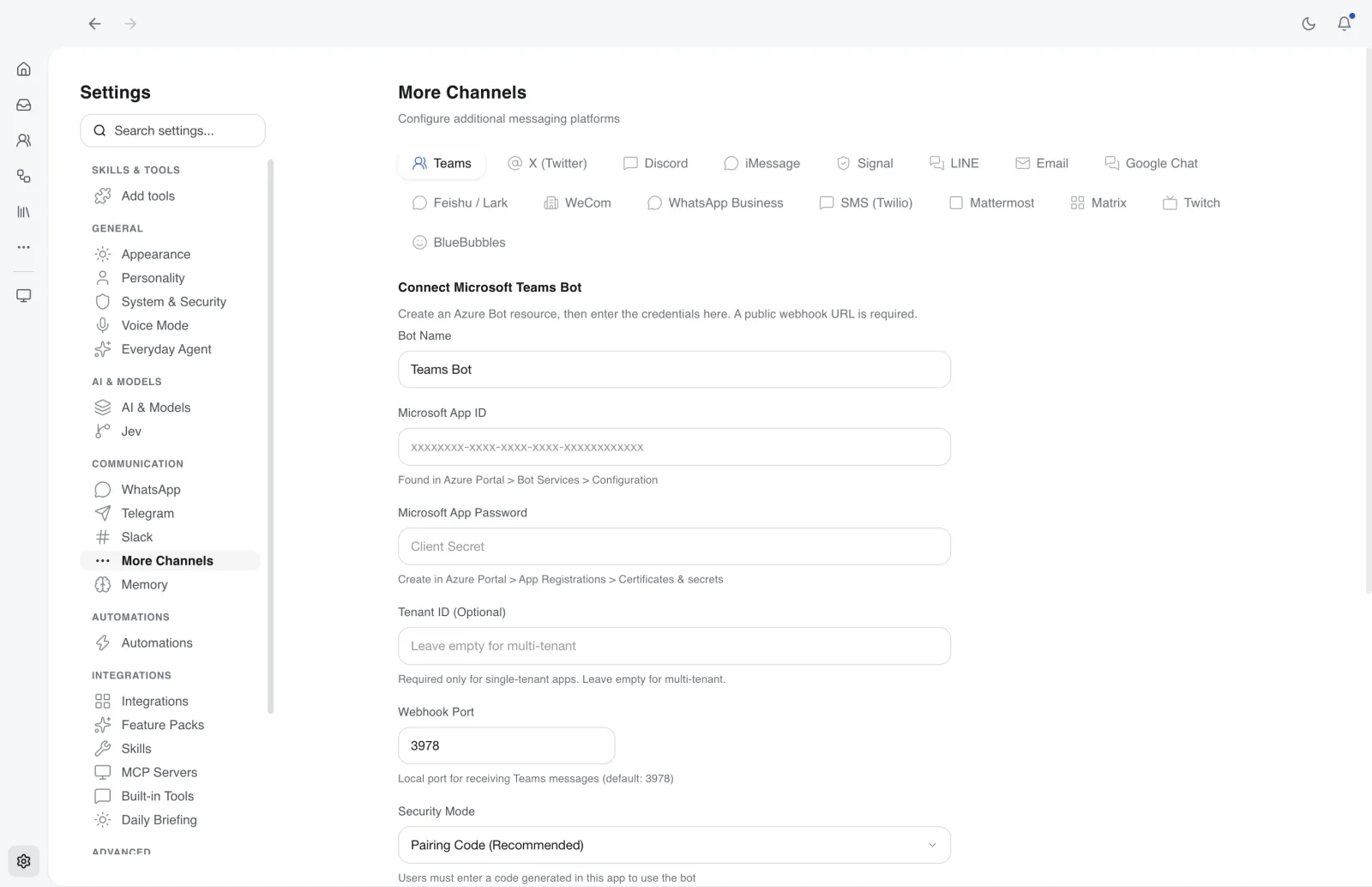
Connect CoWork OS to your messaging channels, providers, and infra surfaces without rebuilding your workflow.
Channels
Channel support docsModels
Provider docsInfrastructure
Full features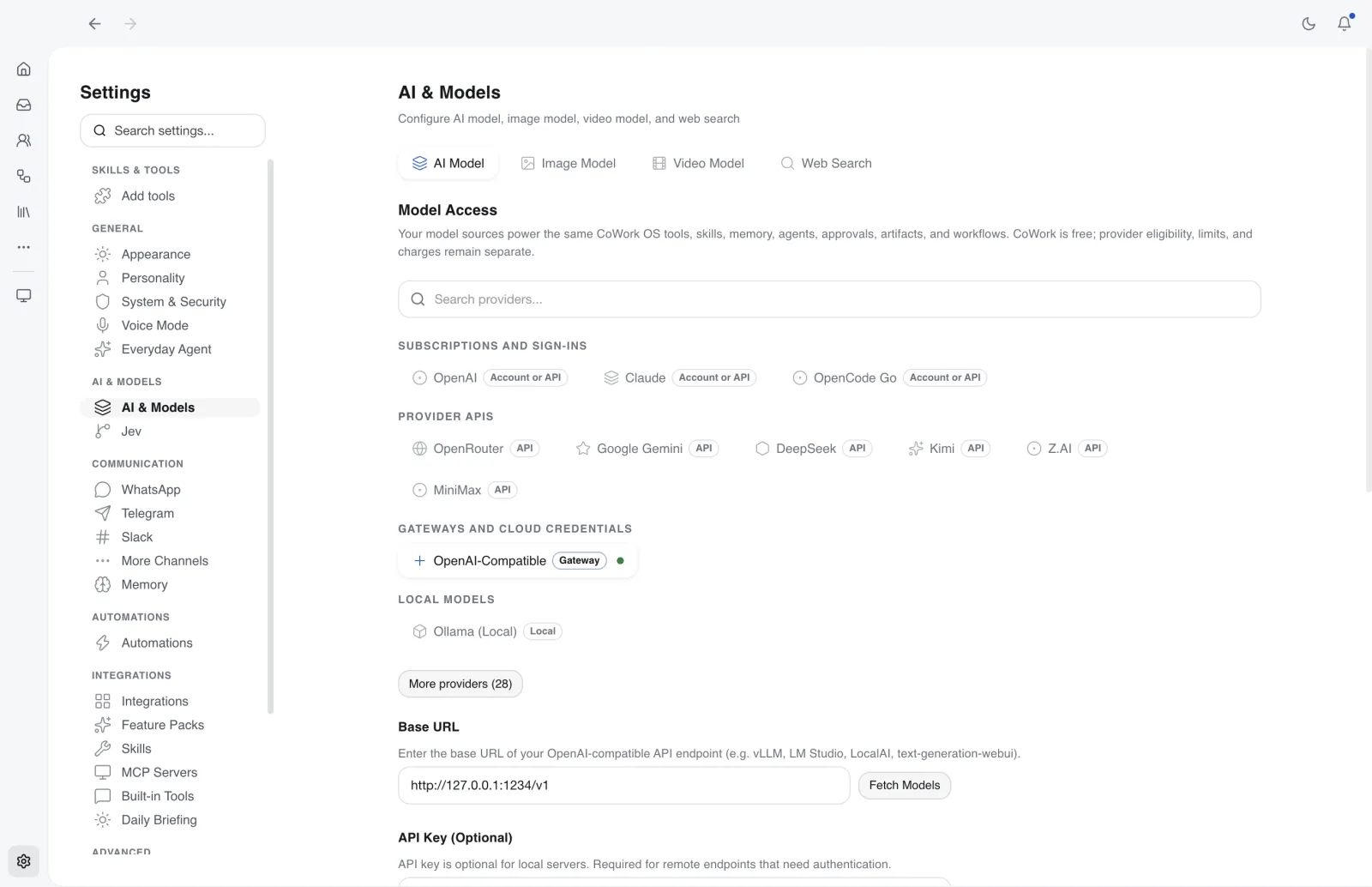
Why CoWork OS
Why people install CoWork OS
Built for real agent workflows — not experiments. Run agents locally with full visibility and control.
Run real agent workflows
Desktop, headless, remote, and channel-based execution. Four per-task modes: Autonomous, Collaborative, Multi-LLM, and Think With Me.
Stay in control
Approval-gated destructive actions, spending controls, and sandbox isolation, with clear boundaries for local and configured cloud services.
See everything
Timeline events, outputs, files, decisions, and operator visibility — all in one place. No blind spots.
Deployment
Deployment modes
Choose the runtime form that matches your environment and operational requirements.
Compare
Comparison resources
If you are already evaluating adjacent agent tools, these down-funnel resources explain where CoWork OS fits.
| Positioning Lens | OpenClaw |  CoWork OS CoWork OS |
|---|---|---|
| Category | Open personal-agent and channel runtime | Open AI super app and desktop control plane |
| Primary use case | Configure and operate an agent hub | Work directly, delegate, review, and automate |
| Security posture | Varies by workflow and setup | Built-in approvals, guardrails, sandbox isolation, encrypted local storage |
| Runtime surfaces | Operator and messaging surfaces | Desktop app + CLI + headless daemon + messaging gateway |
| Data ownership | Self-hosting and configured model providers | Local operational state plus supported account, API, gateway, cloud, and local routes |
Go deeper
Deeper evaluation paths
Product guides, use cases, and comparison pages for readers who have moved beyond the homepage.
OpenClaw alternative
Production-focused comparison and migration framing.
Claude Cowork alternative
Free, open-source local alternative to hosted AI coworking tools.
Personal AI assistant
Execution-first assistant model for real operational workflows.
Agent operating system
Runtime, control, and context layers for team operations.
Agentic systems
Deployment patterns for controlled, production agent execution.
Use cases
Showcase pages, including a novel built end to end with the Novelist skill.
Try it on your own work
Free and open source. Install it with one command and connect the model you already use.